
Restaurant Operations System & Execution Framework
Designing a multi-station operational system that standardizes execution, improves team efficiency, and supports real-time service across front and back of house.

OVERVIEW
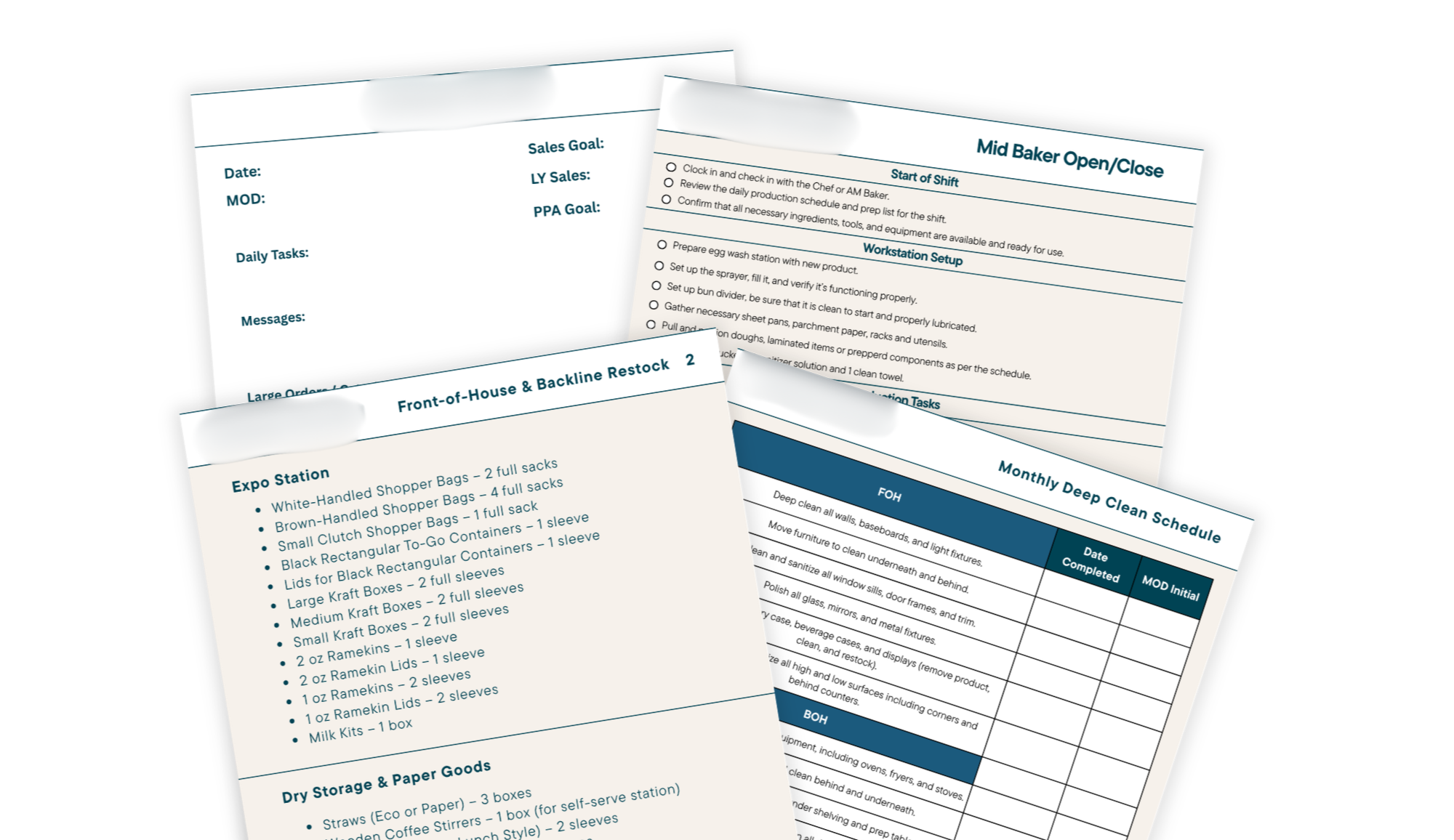
I designed a comprehensive operations system for a high-volume café and kitchen environment to support onboarding, daily execution, and cross-functional consistency.
This system integrates role-specific workflows, real-time task management, inventory standards, and cleaning protocols into a single, structured resource used across front and back of house.
THE CHALLENGE
Operations relied on fragmented processes, verbal instruction, and inconsistent execution across stations.
Each role operated with slightly different expectations, leading to variability in service quality, inefficiencies during peak hours, and gaps in accountability.
There was no centralized system defining how daily operations should run across roles, shifts, and service periods.
THE SOLUTION
I designed a multi-layered operations system that integrates execution, accountability, and standardization into one cohesive structure.
Role-based opening and closing workflows
Station-specific execution standards across FOH and BOH
Real-time task systems, including 15-minute sweep cycles
Inventory, restock, and par level frameworks
Shelf life, labeling, and food safety standards
Cleaning systems structured across daily, weekly, and monthly cadences

SYSTEM ARCHITECTURE
The system is structured as a set of interconnected layers that support both execution during service and consistency over time.
ROLE-BASED WORKFLOWS
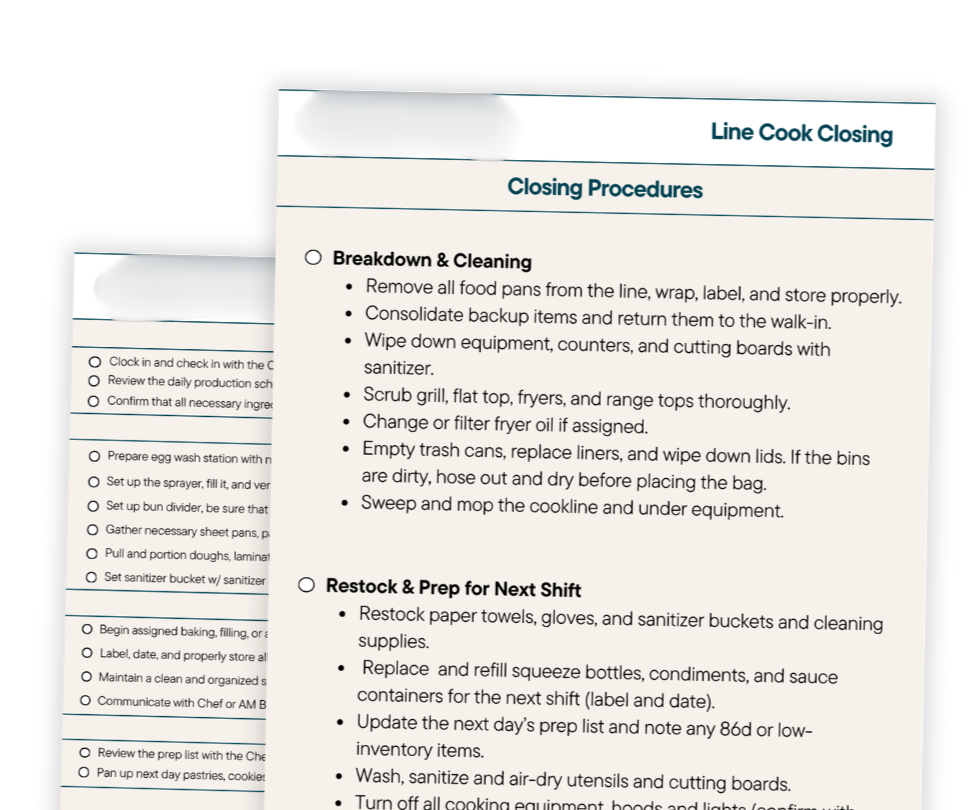
Each role operates with clearly defined opening and closing procedures tailored to their station.
Aligns expectations across shifts
Reduces onboarding time
Supports consistent execution
REAL-TIME EXECUTION SYSTEMS
A structured 15-minute sweep cycle ensures continuous maintenance of cleanliness, organization, and guest-facing areas throughout service.
Prevents reactive cleaning
Distributes responsibility across the team
Maintains standards without interrupting flow
INVENTORY & RESTOCK SYSTEMS
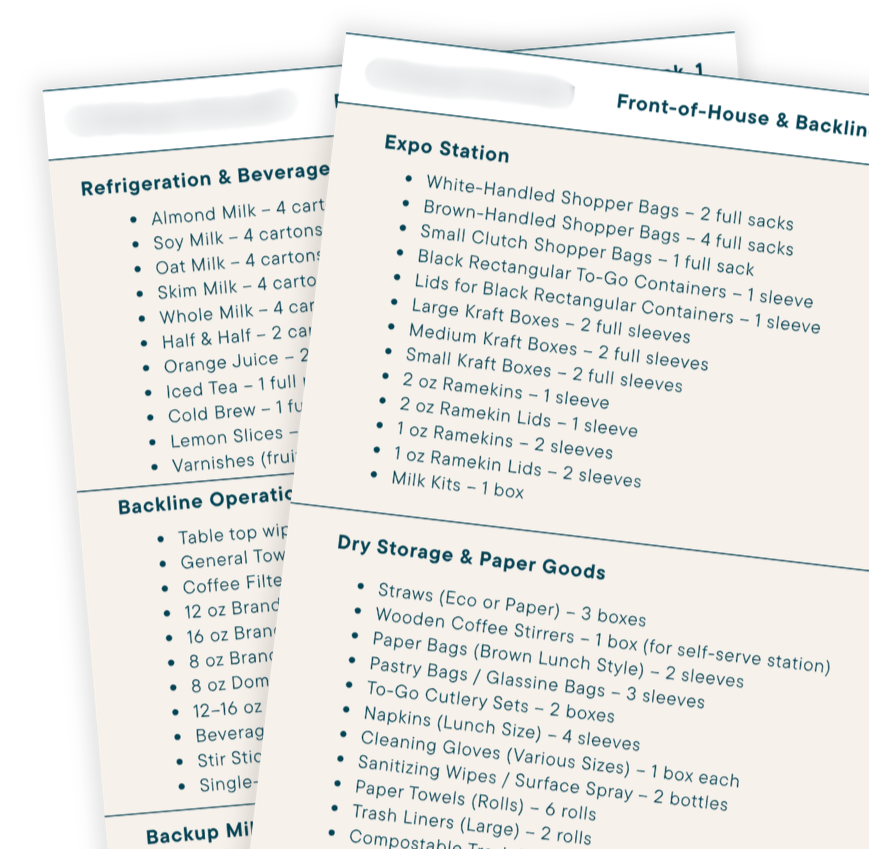
Defined restock standards and par levels ensure that all stations remain stocked and service-ready at all times.
Reduces stockouts
Improves efficiency during service
Supports smoother handoffs between shifts
QUALITY & FOOD SAFETY STANDARDS
Clear shelf life, labeling, and storage guidelines standardize product handling and reinforce consistency.
Protects product quality
Ensures compliance
Reduces waste and uncertainty
CLEANING & SYSTEMS MAINTENANCE
Cleaning is integrated into daily workflows and reinforced through structured weekly and monthly systems.
Eliminates ambiguity in responsibilities
Builds accountability across teams
Maintains long-term operational standards
WHAT I DESIGNED
Multi-role operational system across front and back of house
Structured workflows aligned to real service execution
Real-time task systems for continuous maintenance
Inventory and restock frameworks
Food safety and shelf life standards
Cleaning systems across multiple timeframes
Clear information hierarchy for usability
IMPACT
This system creates a shared standard for how daily operations are executed, reducing variability across roles and shifts.
By centralizing expectations and integrating execution into a single framework, teams are able to operate more efficiently and with greater clarity.
Faster onboarding
Greater consistency
Stronger execution
Why this structure
The system was designed to be accessed in real time, so information is organized by role and task rather than by department or document type.
Key decisions
Workflows, cleaning, and prep were integrated into a single flow to reflect how work actually happens during service.
Real-time tools like sweep cycles and logs were prioritized to support execution, not just training.
Constraints
The system needed to function in a fast-paced environment where multiple roles operate simultaneously and time for reference is limited.
DESIGN THINKING
KEY TAKEAWAY
Operational systems are most effective when they support both clarity and execution.
By defining expectations and embedding them into daily workflows, teams can operate more efficiently, maintain consistency, and deliver a stronger overall experience.