
Standardizing the Handoff.
Designing the event operations framework that keeps high-stakes, multi-team service from falling apart before it starts.

OVERVIEW
Event operations at a fine dining restaurant group look seamless from the outside. Behind the scenes they require precise coordination between sales, kitchen, front of house, security, valet, building management, and external vendors, all of whom need to be aligned before the first guest arrives.
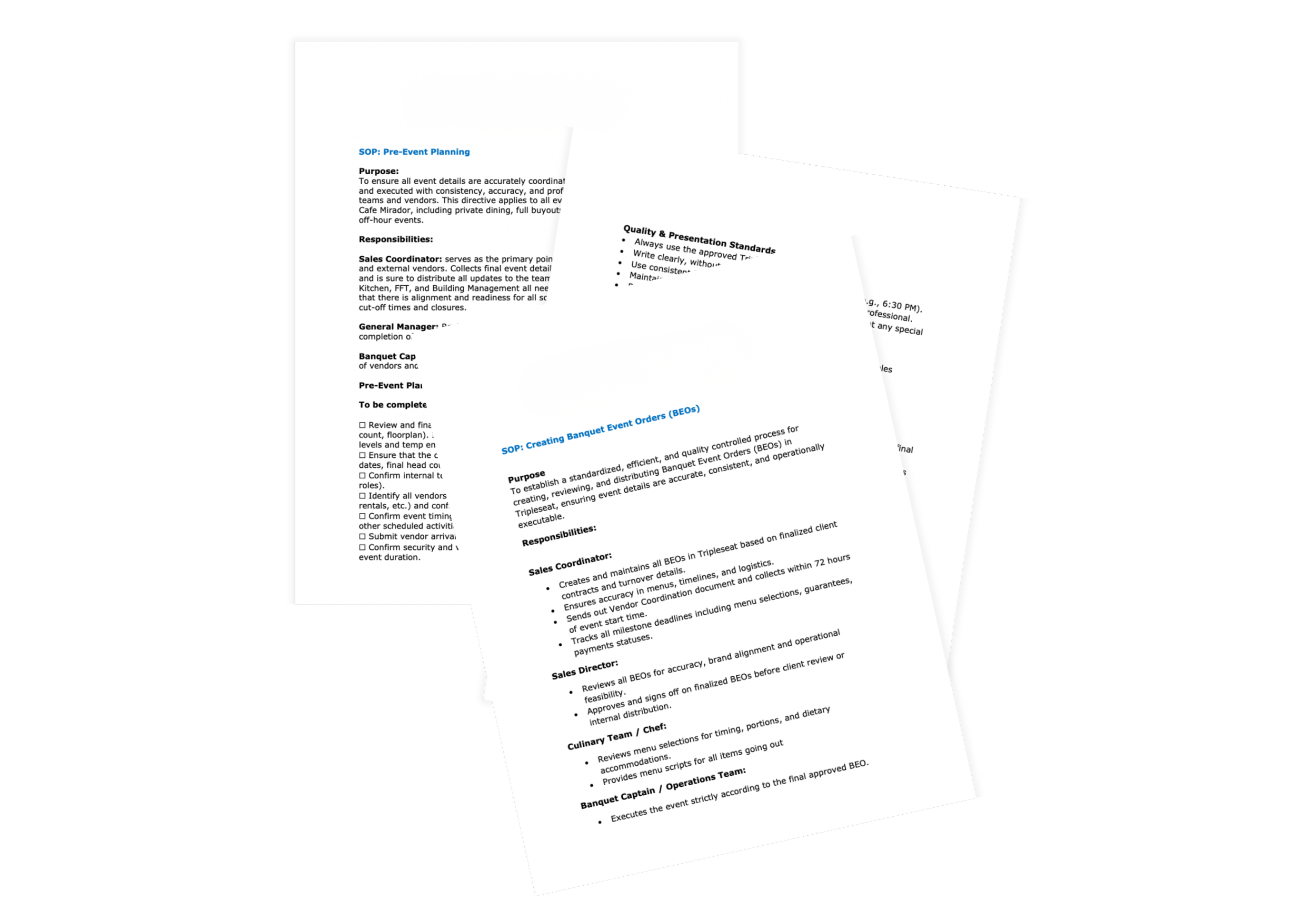
I designed two standard operating procedures to formalize that coordination: a Pre-Event Planning SOP and a BEO Creation process in Tripleseat. Together they define who owns what, when it happens, and what to do when something changes.
My role: sole author of both documents. Designed for daily operational use by real teams across multiple event types including private dining, full buyouts, and seasonal activations at a multi-concept Dallas restaurant group.
THE CHALLENGE
When event execution relies on verbal handoffs and institutional knowledge, things fall through the cracks. A vendor doesn't know which entrance to use. Security wasn't told about the extended hours. The BEO still has last week's guest count. None of these are catastrophic on their own but in fine dining they compound fast, and the guest feels every one of them.
The goal was to turn a process that lived in people's heads into something written, structured, and repeatable regardless of who's in the building.
THE SOLUTION
Two SOPs that together cover the full event lifecycle from initial planning through day-of execution and post-event reconciliation. Every role has a lane. Every deadline is explicit. Nothing lives in someone's memory.

ROLE CLARITY
Before writing a single checklist item, I mapped who owned what. Three roles, three distinct lanes of responsibility.
The Sales Coordinator
The primary point of contact for both internal teams and external vendors. They own BEO creation, the client communication timeline, vendor coordination, and the 72-hour submission standard.
The General Manager
Reviews and approves final event information and confirms the planning checklist is complete before sign-off.
The Banquet Captain
Owner of on-site execution. They conduct the final walkthrough, brief the staff, and document any on-site changes for post-event reconciliation.
Clarity at the role level means accountability at the event level.
SOP 1: PRE-EVENT PLANNING
The Pre-Event Planning SOP covers every coordination touchpoint in the window between contract and execution. Vendor arrivals, building access, staffing assignments, client communication deadlines, online reservation updates, and internal calendar alignment all live here.
The design priority was accountability without ambiguity. Every task has an owner. Every deadline is explicit. The checklist format means nothing gets done from memory and nothing gets skipped because it was someone else's job.
SOP 2: BEO CREATION IN TRIPLESEAT
The BEO SOP standardizes the full lifecycle of a Banquet Event Order from contract turnover through post-event reconciliation. It defines what each role is responsible for, what fields are required, how revisions are handled, how urgent changes get communicated, and how long documents are retained.
The distribution timeline is built directly into the SOP so the team always knows what's due and when, not just on event day but two weeks out. Menu selections at 14 days. Final BEO at 10 days. Final guest count and remaining balance at 7 days. Vendor list and full checklist at 72 hours. Day of, the Banquet Captain runs the walkthrough and the system takes over.

KEY TAKEAWAY
A great guest experience at a fine dining event isn't magic. It's a system. When every person who touches the event knows exactly what they own and when, it runs. When they don't, the guest feels it.
These SOPs turn the institutional knowledge that lives in experienced managers' heads into something any team member can follow, reference, and be held accountable to. That's what good instructional design does for operations: it makes consistency possible regardless of who's in the building.